
◷ Reading Time: 9 minutes
Introduction
Decision Table is a way to model business rules in a tabular form. Each business rules consists of
- Conditions (inputs)
- Actions (outputs)
Preparation
New project and decision table
The first step is to create a new project and add a decision/validation document as a table using the Document --> New menu.
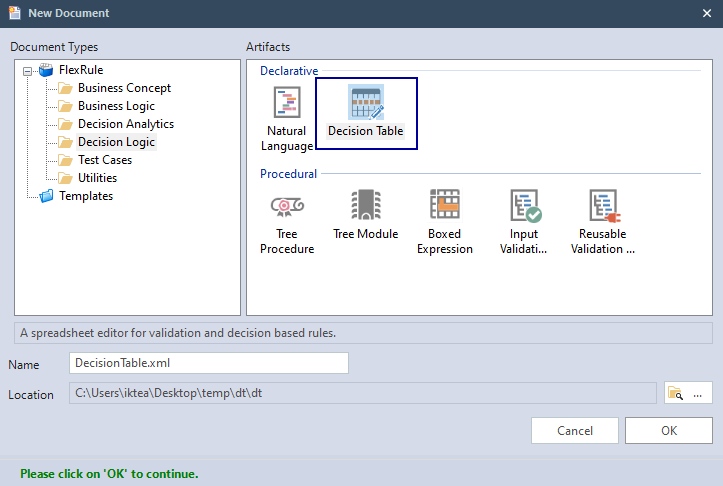
Then open that table document.

When the editor is a Table editor then all the techniques we described for building trees are applicable. However, creating a diagram using the keyboard may not be as easy as the ‘tree’ approach. Also, please keep in mind that positioning an item is not valid in a table.
Add parameters
Add two parameters below:
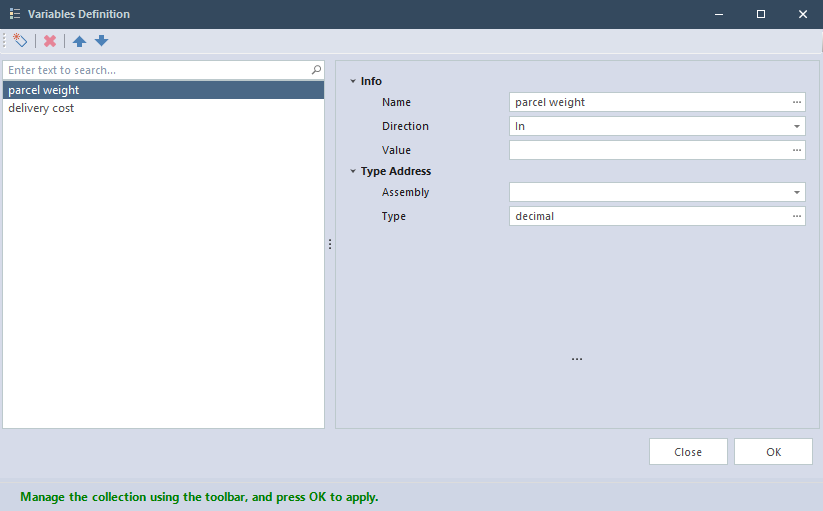
- Input parameter: parcel weight
- Output parameter: delivery cost
To learn more about parameters follow Define and Manage Parameters.
Table Structure
If you have a look at the complete table below:

You see that the table is divided into two sections:
- Signature – the top part
- Values (expressions) – bottom part
Columns
In a table editor, four types of columns can be created:
- Name
- Condition
- Action
- Annotation (Meta Data)
Adding Columns
To add a column, you can simply drag and drop from the toolbox or use the keyboard.

Adding Condition by dragging from the toolbox

Then drop into the decision table.
Moving Columns
For moving columns, you need to select and drag them to the desired position.

Select the column.

Hover over the column and the cursor will be changed.
Press the left mouse button and drag the column to the right position. A vertical indicator will show you where is it going to be dropped.

Release the mouse button.
Delete Columns
To delete a column you can use the toolbar button named ‘Delete Column’.
Rows
Adding Rows
There are several ways to add a new row to the table:
- Drag and Drop from the toolbox
- Using keyboard
- Using toolbar:
- New Row After
- New Row Before
- Using the buttons


Drag and drop Row from the toolbox
Adding Values
To add values into the table cell, you can simply:
- Double click on a cell and start typing
- Select a cell and use the value bar on top of the table
Values In Cell

Double click on a cell. A text box will appear and start typing in the in-place text box. Once finished, press ‘Enter’.
Alternatively, you can just select a cell and start typing.
Value Bar
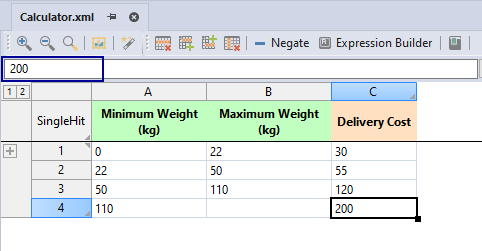
Select a cell and then go to the value bar. Start typing and then press ‘Enter’.
Moving Rows
You can move a row Up and down.

Select, drag and drop to the location you want to move the row
Adding Priority
By default, the rules will run from top to bottom. However, you can set the priority manually as well.


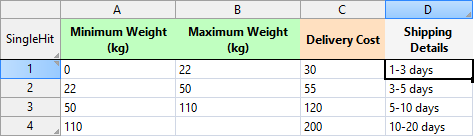
Adding Annotation
Annotation is used to store meta data relevant to the rules. You can simply drag and drop Annotation from the Toolbox.

Input/Output Columns – A Simpler Approach to Creating Decision Tables
While the previous steps provide a comprehensive guide to creating complex Decision Tables, there’s a quicker way to get started.
You can directly drag and drop input and output columns to your Decision Table. This method is ideal for scenarios where the decision logic is relatively straightforward and doesn’t require complex expressions. However, this quick-start method allows users to quickly build a basic Decision Table and relevant parameters and expressions and then continue editing and refining it as needed. It’s a great way to start and create simple effective decision models.
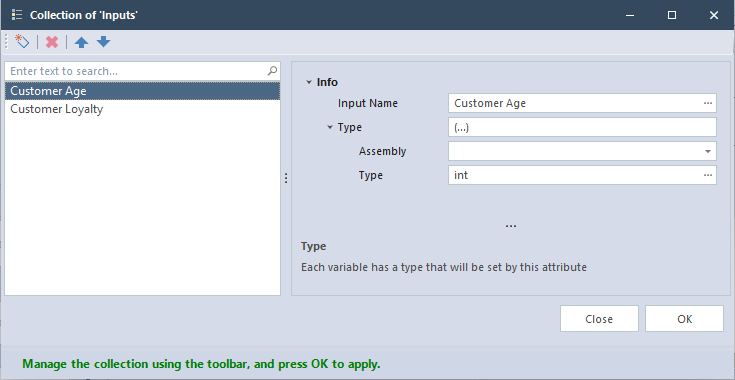
If you want to create a simple Decision Table to determine whether a customer is eligible for a discount, you can directly drag and drop “Inputs” from the Toolbox and create inputs like “Customer Age” and “Customer Loyalty” and set the types accordingly.

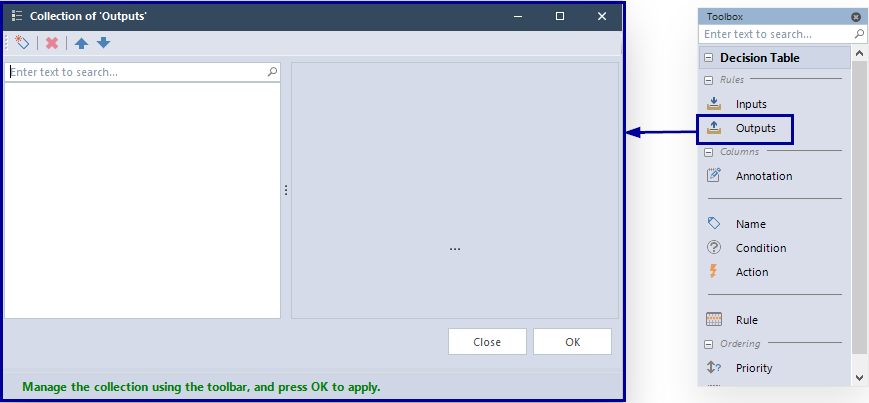
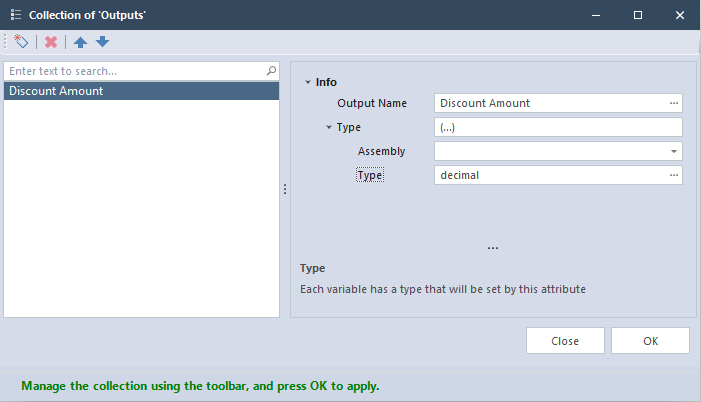
an output column like “Discount Amount”.
Then the Decision Table will be generated as follows:
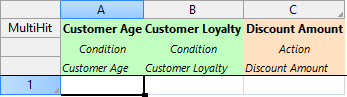
Then, you can populate the table with rules that define the discount amount based on the customer’s age and loyalty level.